WHEN SHOULD YOU INVOLVE A FABRICATOR IN AN ARCHITECTURAL PROJECT?
Specialist fabrication is sometimes treated as one of the final stages of an architectural project: drawings are completed, materials are selected and the fabricator is invited to price and produce the work.
For straightforward components, that may be sufficient. For bespoke elements, unusual materials or complex detailing, waiting until the design is fully resolved can limit the options available.
So, when should a fabricator become involved?
The answer depends on the project, but the most useful time is usually before every technical decision has been fixed. Early input does not require a complete drawing package or a confirmed order. It can begin with a sketch, a material sample or a conversation about what the design needs to achieve.
Concept design: establishing what may be possible
At concept stage, the design may still consist of reference images, initial sketches and broad material ideas.
It is too early for detailed production advice, but not too early to discuss feasibility. A fabricator can provide an initial view on whether the proposed material is appropriate, which processes may be required and whether the scale or geometry presents any obvious challenges.
This can be particularly valuable when a design includes curved forms, intricate inlays, mixed materials, large-format components or details that have not been produced before.
The discussion may also reveal that an element will need to be divided for production, that sampling should be allowed for or that one particular decision is likely to have a significant effect on cost.
The objective is not to solve every technical question immediately. It is to identify the important ones early enough for them to inform the developing design.
Design development: resolving materials and details
Design development is often the point at which fabrication input has the greatest influence.
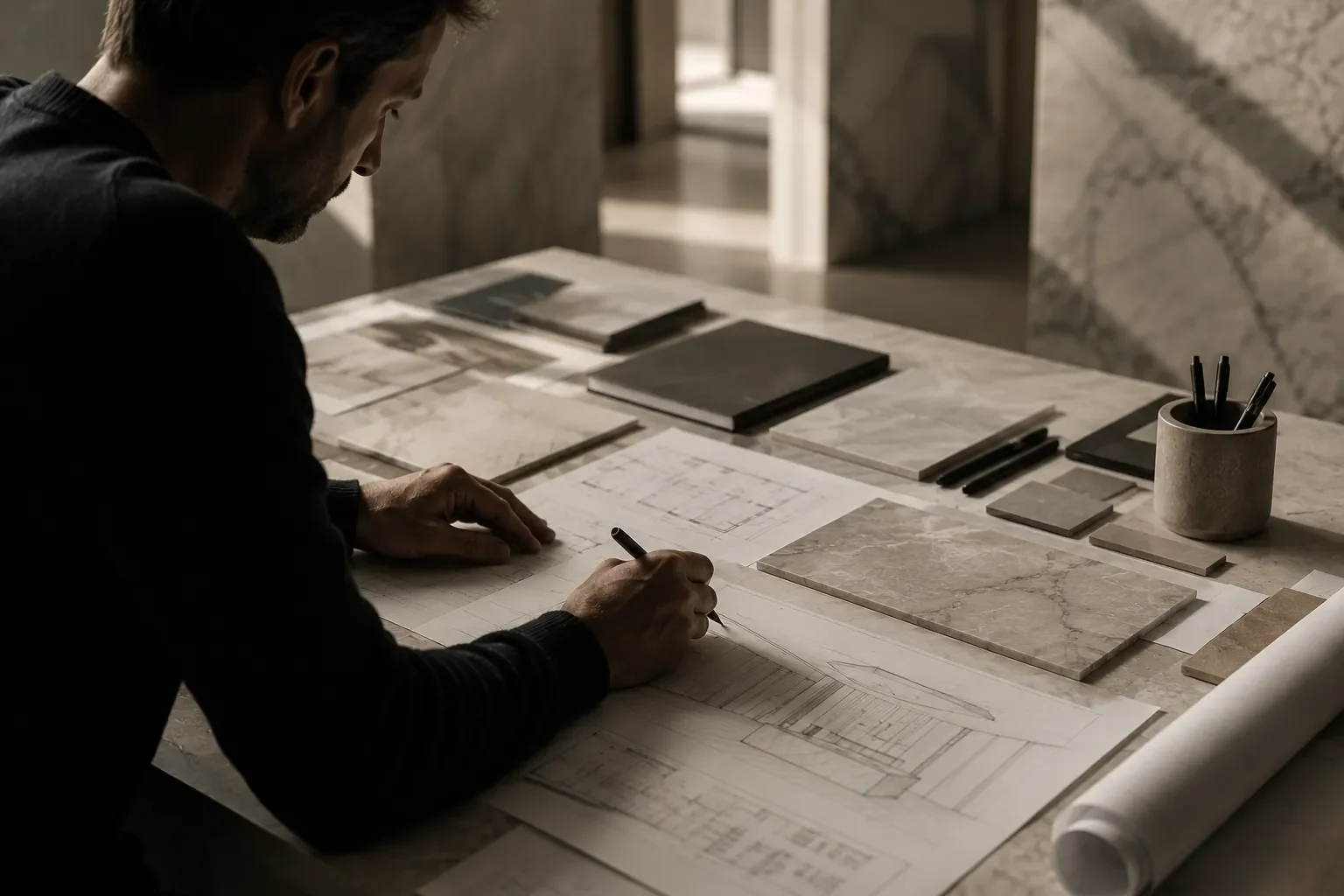
The overall concept has been established, but details, materials and construction methods may still be open to refinement. This gives the design team and fabricator space to examine how individual components will work before the drawings become fixed.
The conversation becomes more specific. Is the selected material appropriate for the proposed thickness and span? Where should joints sit? How will veining, pattern or aggregate continue between components? Which edge profile will achieve the intended appearance? Can the finished element be transported and handled safely?
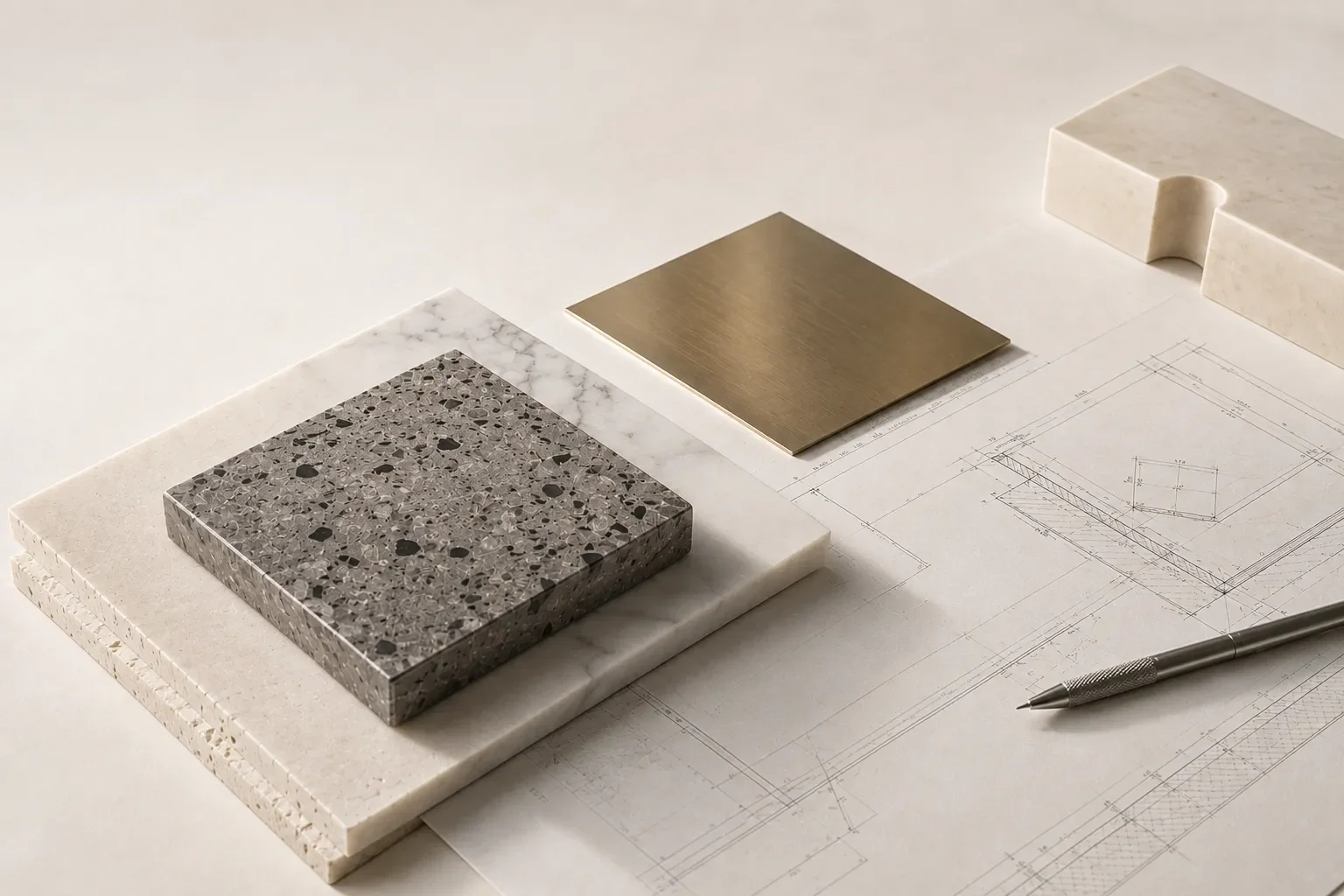
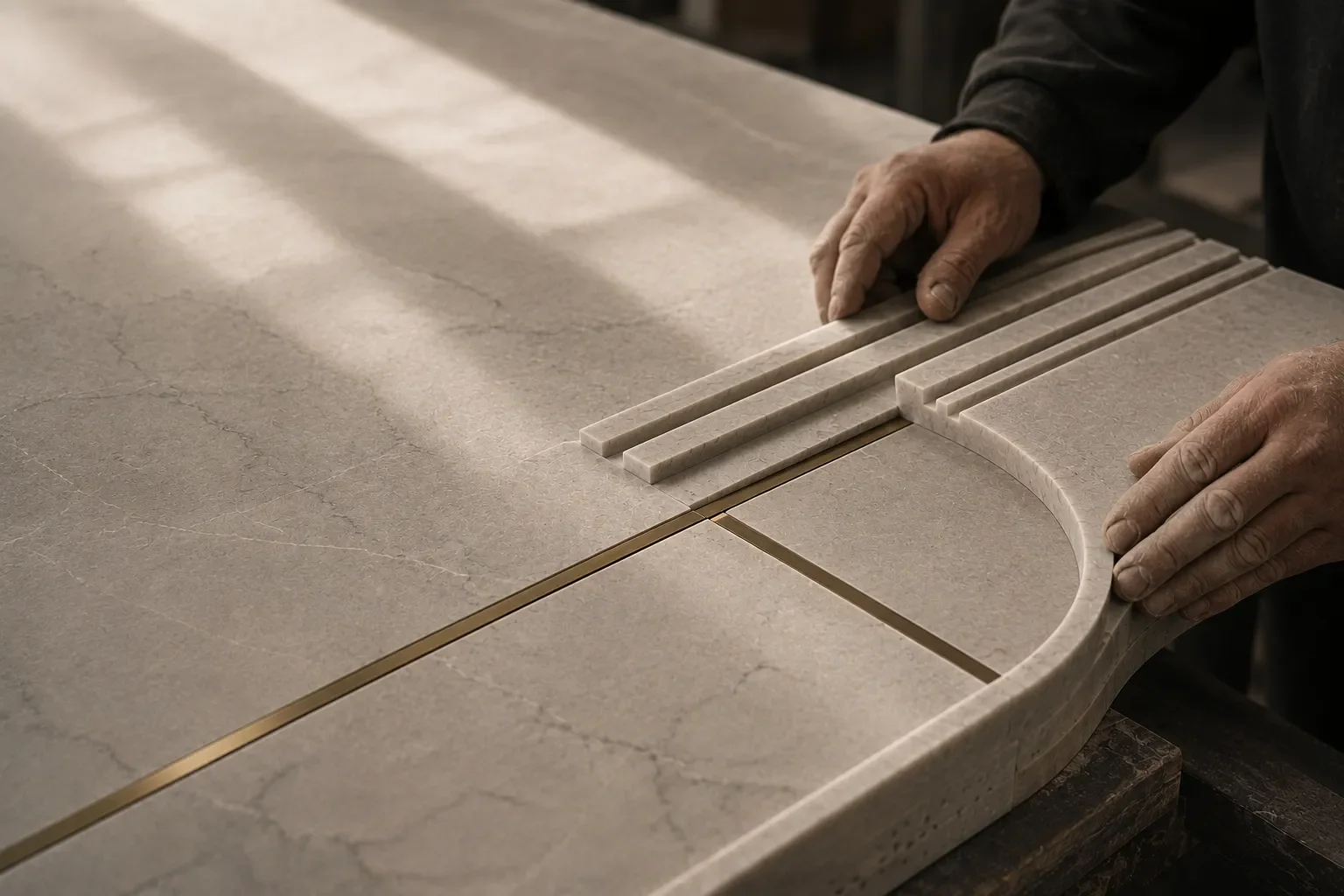
The way different materials meet may also require careful consideration. Stone, terrazzo, porcelain and metals each behave differently, and the junction between them may introduce questions around tolerances, movement, fixing and assembly.
A small adjustment at design-development stage can prevent a much larger change later. A radius may need to be refined, a seam moved or a material thickness reconsidered. These decisions are easier to evaluate before materials have been ordered and installation dates confirmed.
Technical design: preparing for accurate production
As the project moves into technical design, the conversation becomes more precise.
Dimensions, junctions, tolerances and fixing details need to be coordinated. Drawings should clearly distinguish between overall design dimensions and the information required to manufacture each component.
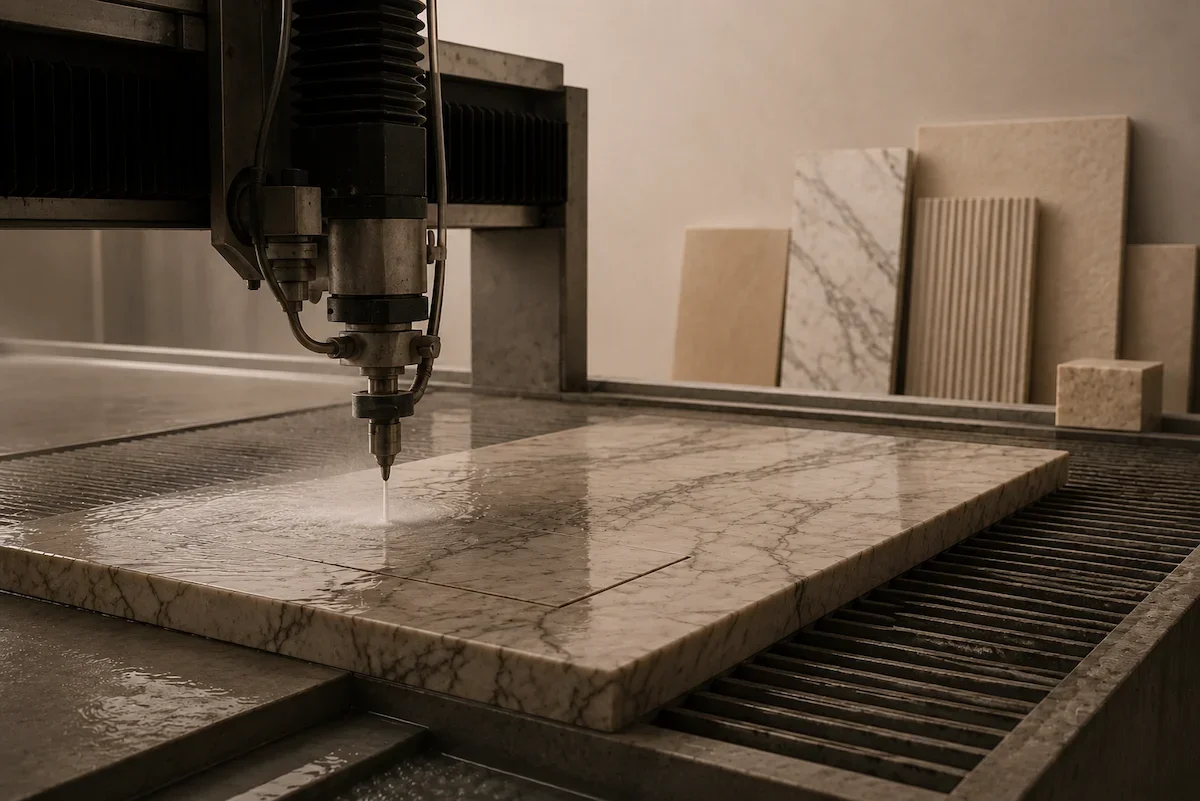
For waterjet cutting, clean production files are essential. DXF drawings should contain joined, closed and trimmed linework without fills, duplicate lines or unnecessary information. Where possible, AutoCAD DXF files should be saved in the 2000 format.
A separate dimensioned PDF is also useful. It gives the fabrication team a clear visual reference against which the production file can be checked.
The technical information should confirm the material, thickness, quantity, finished dimensions and any required edge or surface treatment. It may also need to identify joint positions, cut-outs, fixing points, visible faces and the direction of grain, veining or pattern.
Installation conditions matter too. Access restrictions, supporting structures and the sequence in which components must be assembled can all influence how an element should be fabricated.
Clear information at this stage reduces assumptions and creates a more reliable route from approved drawing to finished component.
Before materials are ordered
Material should not be considered separately from the way it will be fabricated.
Natural stone varies from slab to slab. Veining, fissures and areas of weakness can affect component positioning and cutting layouts. Terrazzo aggregate, porcelain composition and the characteristics of technical stone can also influence the most appropriate approach.
If appearance is critical, slabs or sheets may need to be reviewed and allocated before production. Bookmatching, vein continuity and the relationship between adjacent pieces should be planned against the actual material wherever possible.
An early material review can establish whether the available slab or sheet sizes suit the component layout, how much material may be required and whether additional allowance is needed for matching or natural variation.
It can also reveal whether the proposed detail is appropriate for the selected material or whether a sample would be advisable before the full quantity is ordered.
This does not replace the architect’s or designer’s material selection. It ensures that the selected material can be used effectively within the proposed fabrication strategy.
Pre-production: confirming the important information
Before production begins, the project team should have a shared understanding of what has been approved.
The latest drawings, dimensions, materials, quantities, finishes and edge details should all be confirmed. Where a detail is unusual or visually important, a physical sample or prototype may also be appropriate.
The approval process should identify who is responsible for confirming each piece of information. Late changes can affect cutting layouts, material quantities and production schedules, so amendments need to be recorded and communicated clearly.
For more complex work, it is also useful to confirm the fabrication and assembly sequence, delivery requirements, installation dates and site access arrangements before production starts.
This preparation may happen behind the scenes, but it helps maintain consistency throughout fabrication and reduces the risk of important decisions being made under pressure later.
When does early involvement matter most?
Not every project requires extensive fabrication consultation. A simple component produced from a clear and proven detail may only need an accurate drawing and confirmed material specification.
Earlier involvement becomes more valuable when the work includes unfamiliar geometry, prominent natural veining, fine edge details, precision inlays or mixed-material junctions. It also matters when components are particularly large, need to be repeated consistently or must fit within tight installation tolerances.
Transport and site access can be equally important. A component that can be fabricated successfully in the workshop may still need to be divided or assembled differently if it cannot be moved safely through the building.
In these situations, speaking to a fabricator before the design is fully fixed gives the project team more opportunity to compare options and make informed decisions.
What should you send to a fabricator?
You do not need a complete technical package to begin a conversation. At an early stage, it is helpful to share whatever information is already available, such as:
sketches, concept drawings or reference imagery
preliminary dimensions and expected quantities
material ideas or physical samples
information about the intended setting
known installation or access constraints
the aspects of the design that must not change
It also helps to explain which areas remain open for development. This allows the fabricator to distinguish between an essential design requirement and a detail that can be adapted if a more effective solution is available.
As the project develops, CAD drawings, dimensioned PDFs and confirmed specifications can then be introduced.
A timely conversation, not a finished answer
Involving a fabricator early does not mean every detail needs to be resolved immediately.
The purpose is to ask the right technical questions at the point when the answers can still influence the project. Sometimes that requires an extended development process. Sometimes a brief drawing review is enough.
Either way, the timing matters.
The best moment to speak to a fabricator is not necessarily when the design is complete. It is when specialist material and production knowledge can still help the design team make confident, well-informed decisions.
Planning a project?
If you are developing a detail, exploring materials or working through a complex fabrication challenge, involve us early. We can review your drawings, discuss the available options and help establish the right approach before production begins.
START A CONVERSATION →